management
Written by

Ben Glass
Product Research
Sharing links



Last updated •
Summarize with AI










TL;DR: Paperwork is the single biggest bottleneck preventing UK advice firms from growing, not client demand. Independent process mapping by Jigsaw Tree shows AI cuts annual review time by 59.8% and suitability report time by 65.48%, releasing roughly 3.5 hours per review and over an hour of adviser time each cycle. Financial modelling by The Flower Group demonstrates that doubling adviser capacity with the same headcount can translate into a 300% increase in firm value, moving a typical two-adviser firm from £1.26m to £3.77m valuation, and up to £8.87m when combined with client book optimisation and pricing adjustments. The opportunity is not whether AI creates efficiency, but how firms choose to deploy the time it returns: scaling, deepening client service, or reclaiming personal capacity.
This whitepaper combines insights from leading figures at UK financial advice firms with independent survey data from Trustnet and process mapping audits by Jigsaw Tree. It is the roadmap to move from paperwork to peoplework.
Trustnet's survey shows that paperwork is the main bottleneck preventing growth, and Jigsaw Tree demonstrates that AI significantly reduces it, cutting annual review and suitability processes by more than 60%.
The real question is not whether AI creates efficiency, but how that efficiency transforms firms by impacting their ability to scale, improve service, and create value.
Some firms will use the time to grow, serving twice as many clients with the same team. Others will reinvest it into client experience, deepening service and strengthening loyalty. And some will choose to recalibrate, claiming weeks each year for strategic projects or personal life.
For those who choose to scale, the financial impact is significant. Financial models by The Flower Group show how doubling adviser capacity with the same headcount translates into a 300% increase in the value of your firm.
In the pages that follow, we set out the data behind these gains, the real-world results from firms already achieving them, and a practical framework to help you turn efficiency into lasting value.
The Supply Constraint in Financial Advice
Demand is not the problem
There is no shortage of households that could benefit from professional advice. Just 9% of UK adults received financial advice about their pensions or investments in the past year (FCA Financial Lives). Around 7 million adults hold £10,000 or more in cash savings that could be invested, and 62% of existing investors say they would welcome more help managing their investments (FCA). Only 2.7 million households receive ongoing financial advice (NextWealth).
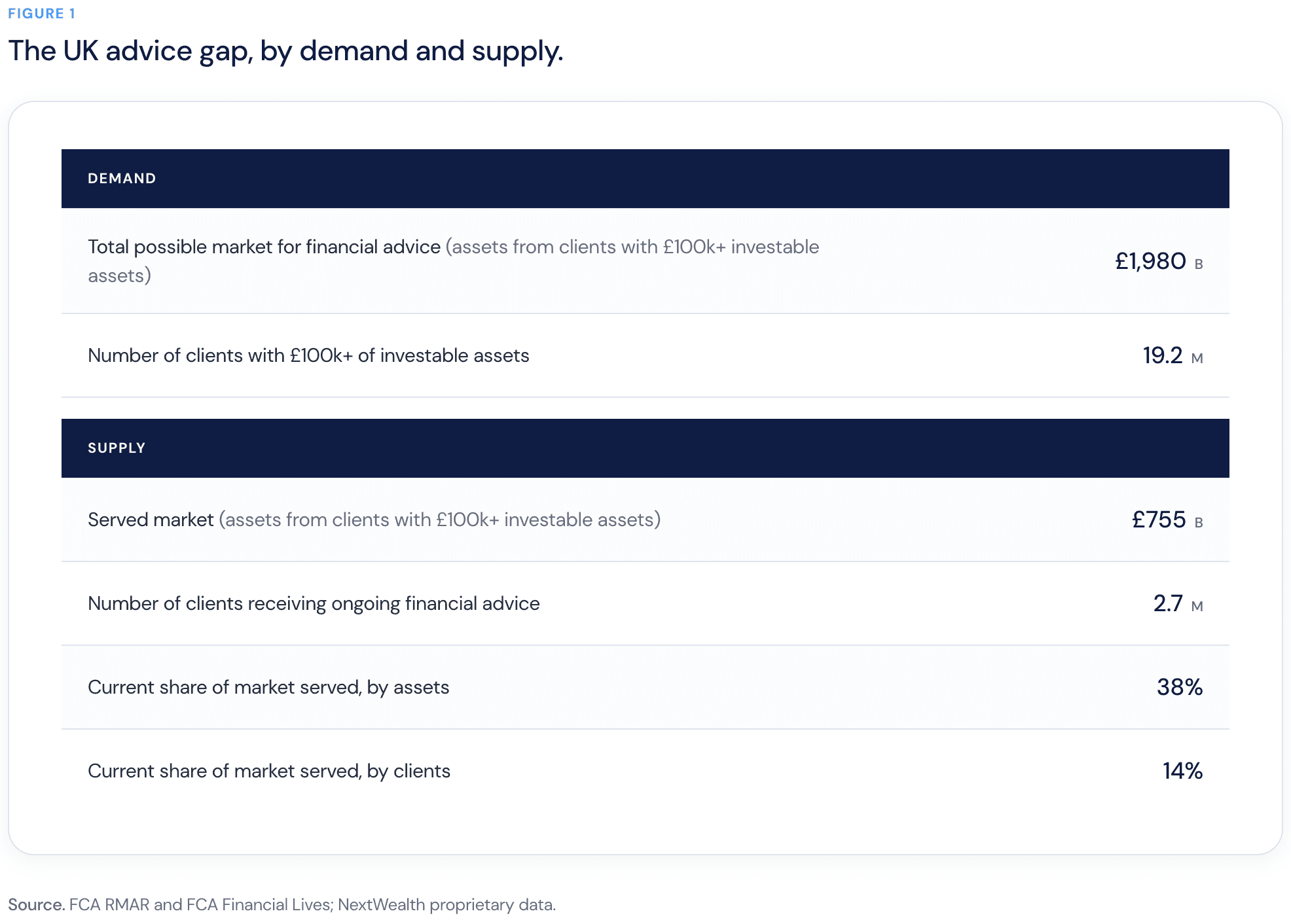
The consumer impact of this imbalance is already visible. Fewer than 9% of UK adults have paid for financial advice in the past two years. Among over-45s, the group most in need of retirement planning, three in four lack a pension plan.
Advisers therefore face an abundance of potential clients, but they cannot expand service capacity beyond current limits. In many cases, smaller clients are being disengaged in order to preserve margins. The long-term risk is that profitable future relationships are lost in the process. Financial lives are not linear. Inheritance, divorce, or the sale of a business can transform a £50,000 client into a £500,000 client overnight. Failing to onboard these clients today forfeits tomorrow's value.
The Paperwork Problem
In our research with more than 150 firms, one theme was clear: the single biggest blocker to growth is not demand, but time. Meeting notes, suitability reports, reviews, onboarding, compliance checks, re-keying data: each task has a purpose, but together they drain capacity.
This isn't just about lost efficiency. Long documentation cycles translate into evenings spent on reports instead of with clients, squeezed diaries, and missed chances to spot risks. 43.3% of advisers told us paperwork and admin leave them with less time for advice itself. The opportunity cost compounds: fewer proactive reviews, slower onboarding for referrals, and less bandwidth for business development or strategic work.
"By the time you've finished the suitability letter, the onboarding, the compliance check, and the review, there's no time left to grow."
Reviews, Suitability and Systemic Inefficiency
Of all the admin tasks firms face, no single task absorbs more time than suitability reports. Our research shows 71.9% of firms spend between one and seven hours on a single report. Within that, 39% spend 1–3 hours, and another 32.9% spend 4–7 hours. Only 13.7% complete a report in under an hour.
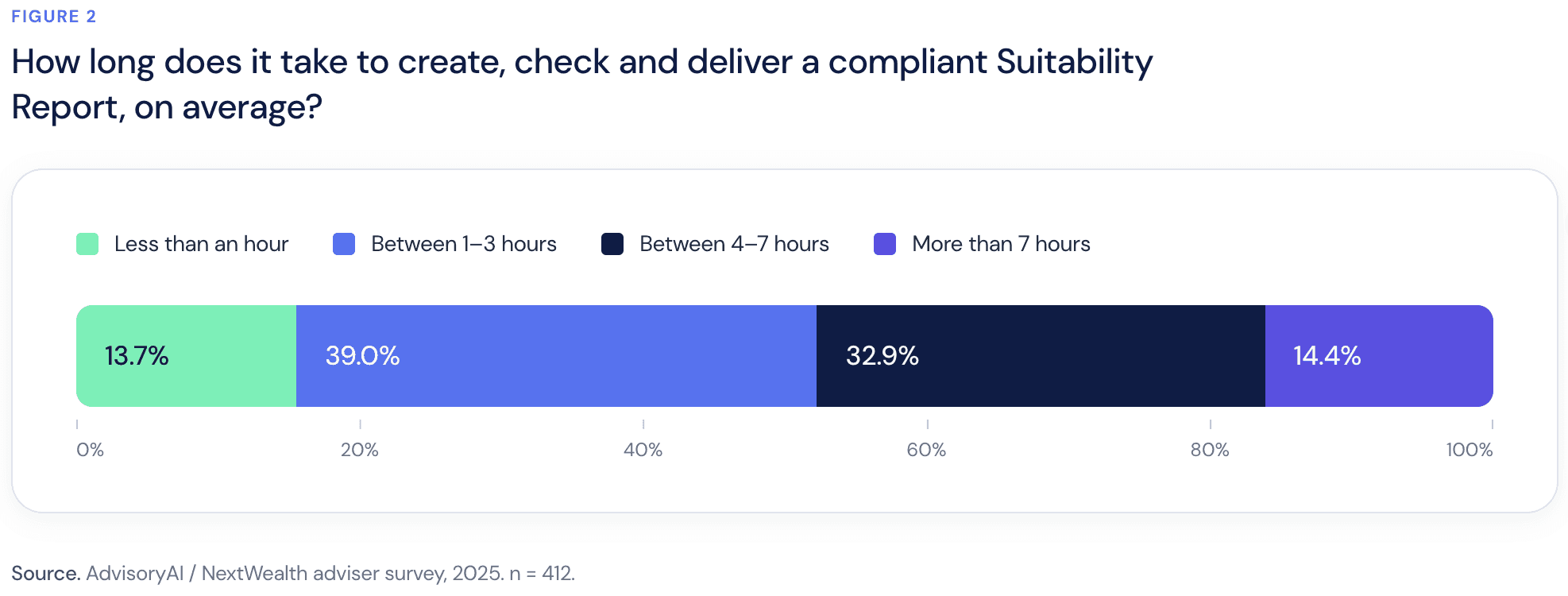
The scale of the inefficiency is striking. Producing just two suitability reports can consume an entire day, even before accounting for compliance checks, rework, or missing data. Advisers told us this isn't the occasional bottleneck: it's the constant choke point that consumes their week.
Firms already experimenting with AI reveal how stark the contrast can be. With automated drafting, fact-find validation, and pre-built compliance checks, firms like TJP, finli and Foster Denovo are producing twice as many reports.
"For withdrawals... you certainly get through a lot more. You know, you're not doing 3 a day. You might be doing 5 a day, 6 a day."
— Andy Featherstone, Paraplanner at finli
Why the Problem Persists
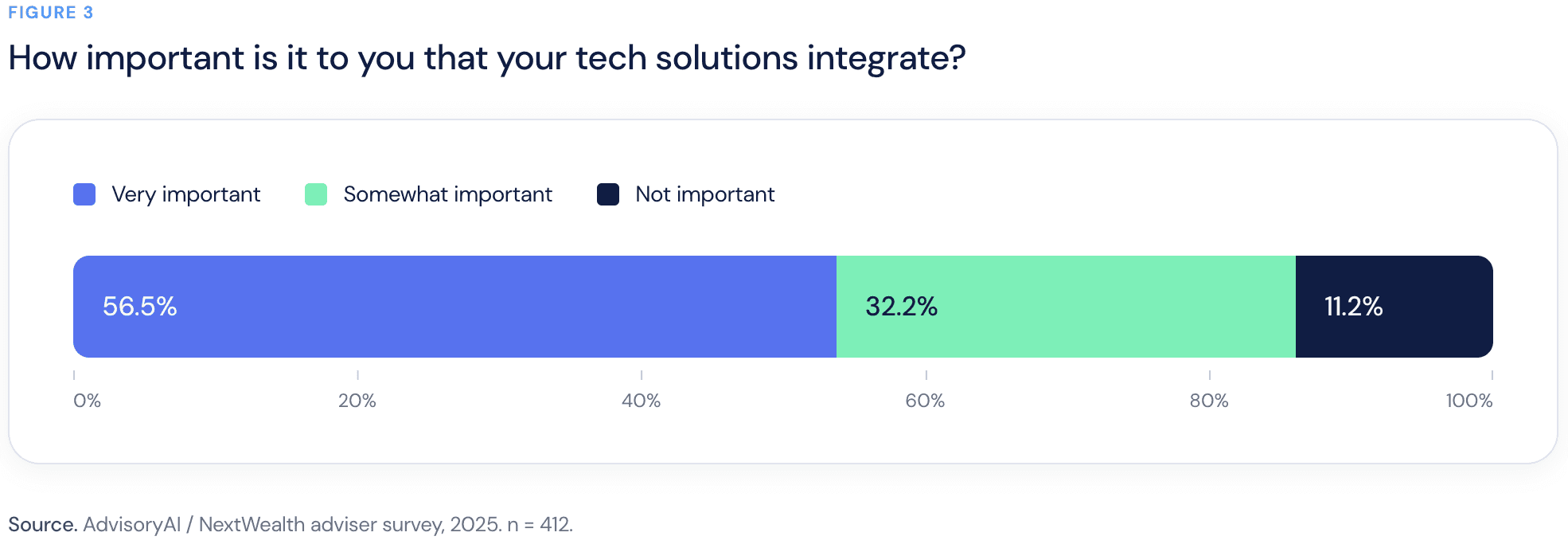
Even where firms have invested in technology, poor integration leaves many stuck. One in three advisers told us their systems still aren't good enough, despite more than half saying integration is "very important". The result is duplication and delay.
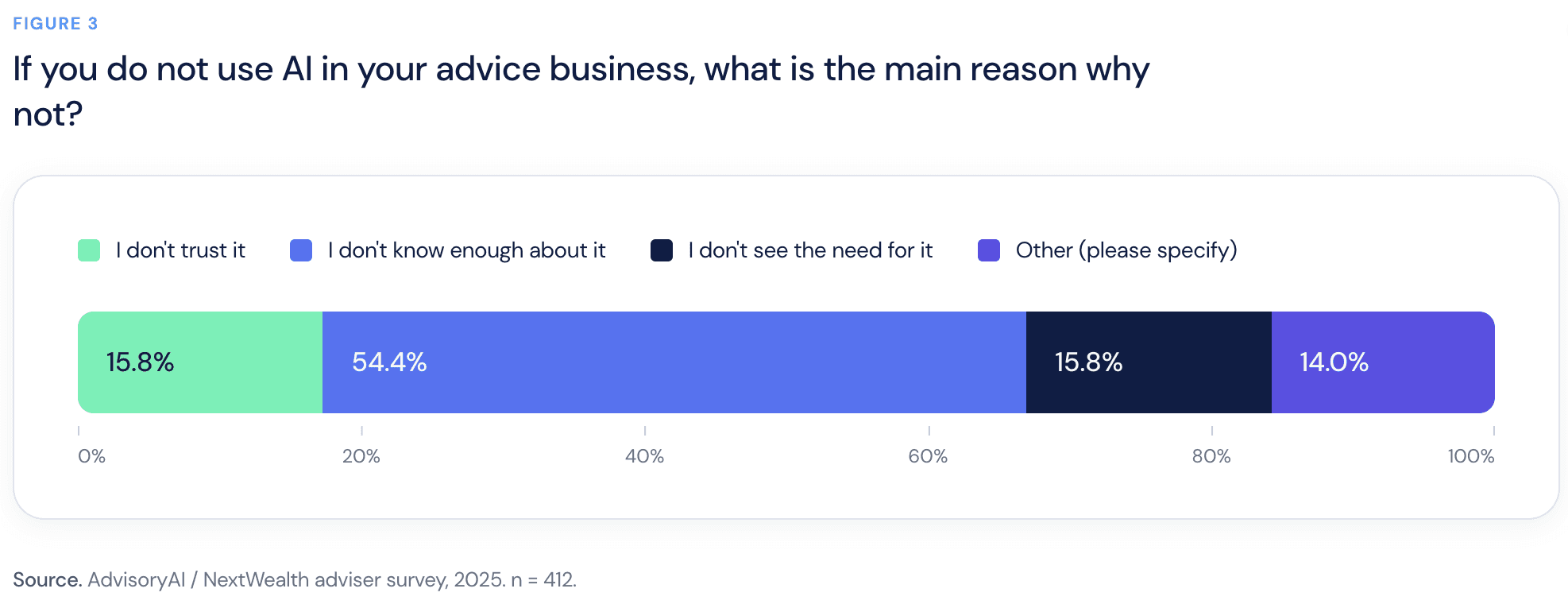
AI has the potential to change this equation. Our research shows it can cut hours from suitability, reviews, and onboarding. But knowledge is a barrier. More than half of advisers said they don't know enough about AI to use it effectively. That uncertainty breeds caution, so even as the paperwork piles up, many firms stick with manual processes. Bridging that gap, moving from awareness of what AI can do to the confidence to implement it, is one of the key challenges this paper sets out to address.
[Image: Bar chart — If you do not use AI in your advice business, what is the main reason why not? I don't trust it 15.8%; I don't know enough about it 54.4%; I don't see the need for it 15.8%; Other 14.0%]
Jigsaw Tree Research
If the weight of paperwork is the problem, the natural next question is: what happens when you redesign the process? That's where Jigsaw Tree's work becomes invaluable. As one of the most respected consultancy and operations specialists in the financial advice sector, Jigsaw Tree has spent years mapping adviser workflows and measuring the real-world impact of change. Their analysis offers something rare: a clear, process-by-process comparison of traditional human-only workflows against hybrid human-and-AI models.
The results provide hard evidence across the most time-intensive processes in advice firms: annual reviews and suitability reporting. Each process is broken down into hours per resource type, and then re-measured under an AI-enabled model. The data paints a compelling story: that the bottlenecks throttling adviser growth are not fixed features of the industry, but design flaws that can be solved.
Key Stats
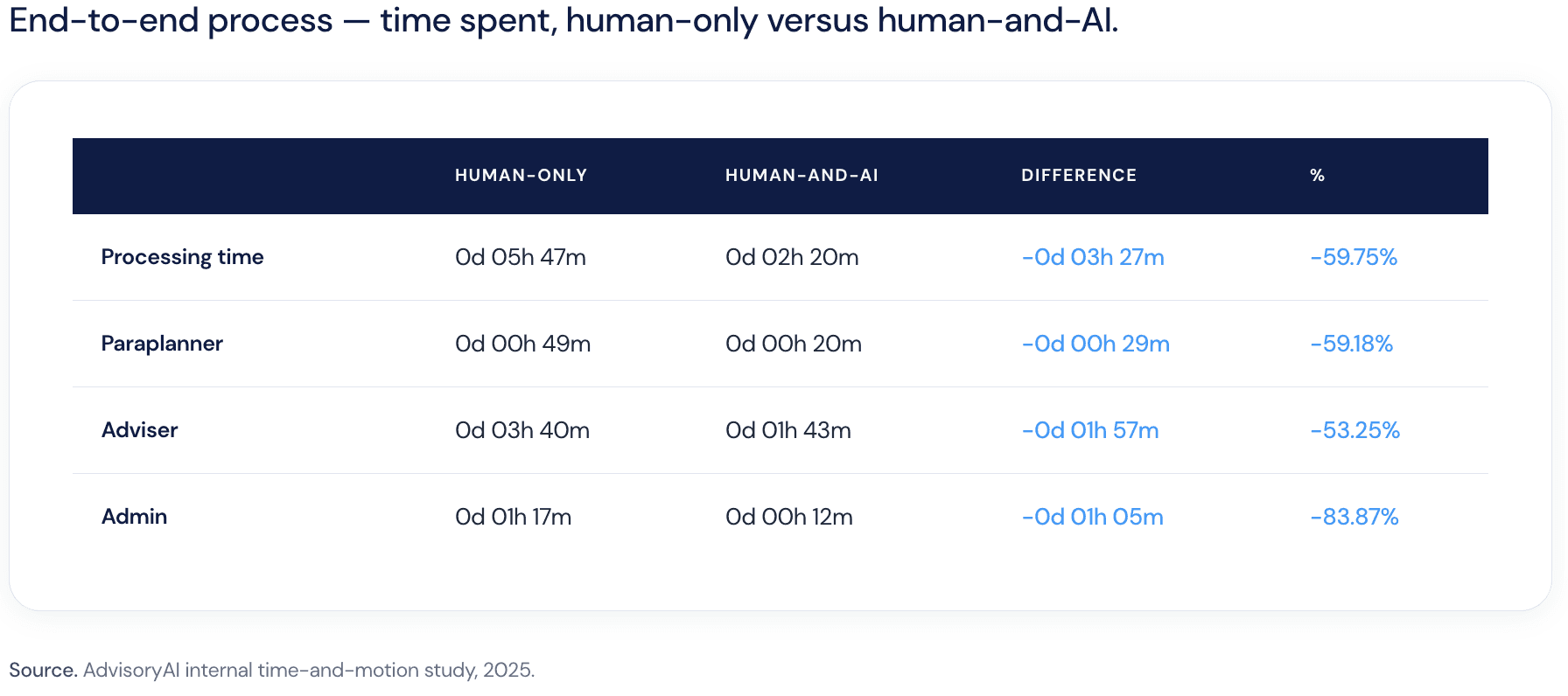
Total time for annual reviews decreased by 59.8% overall, from 5 hours 47 minutes to just over 2 hours 19 minutes.
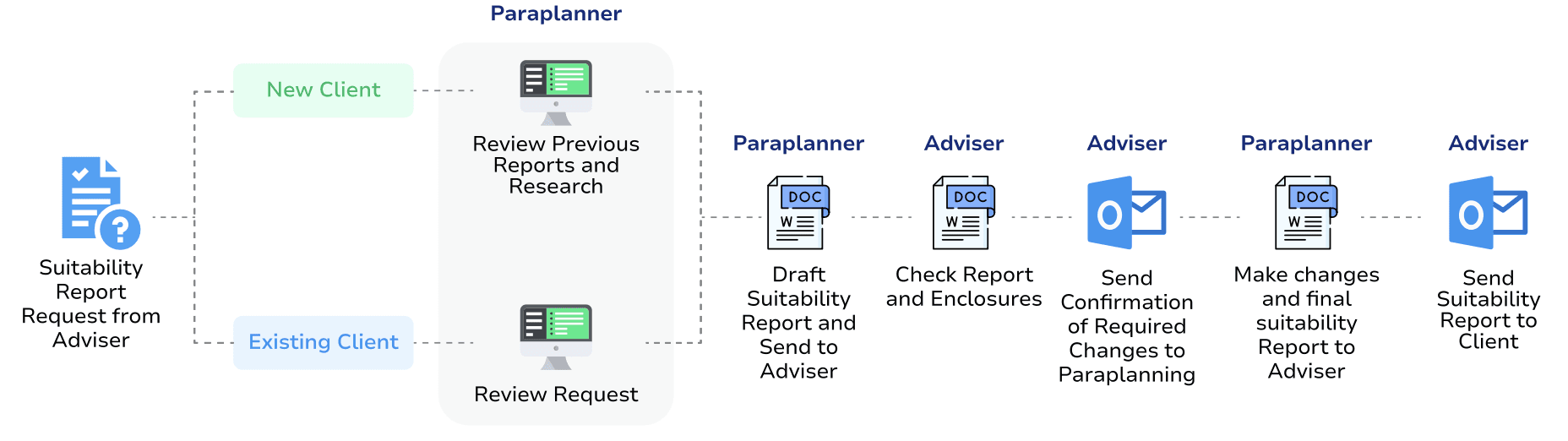
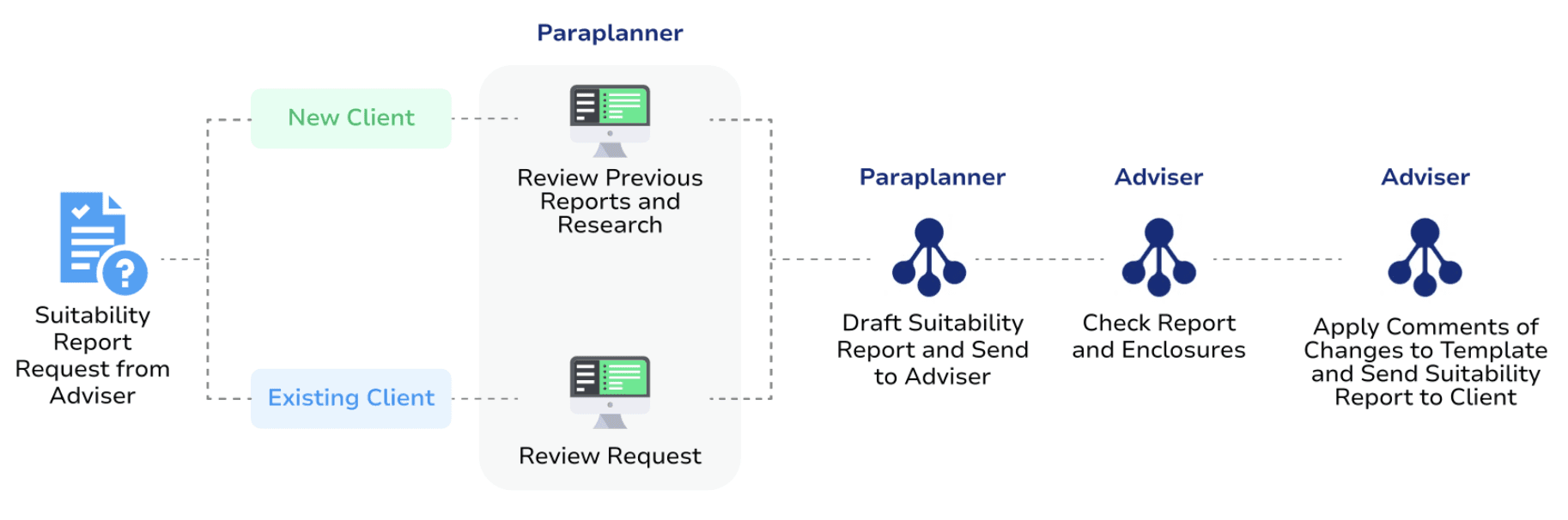
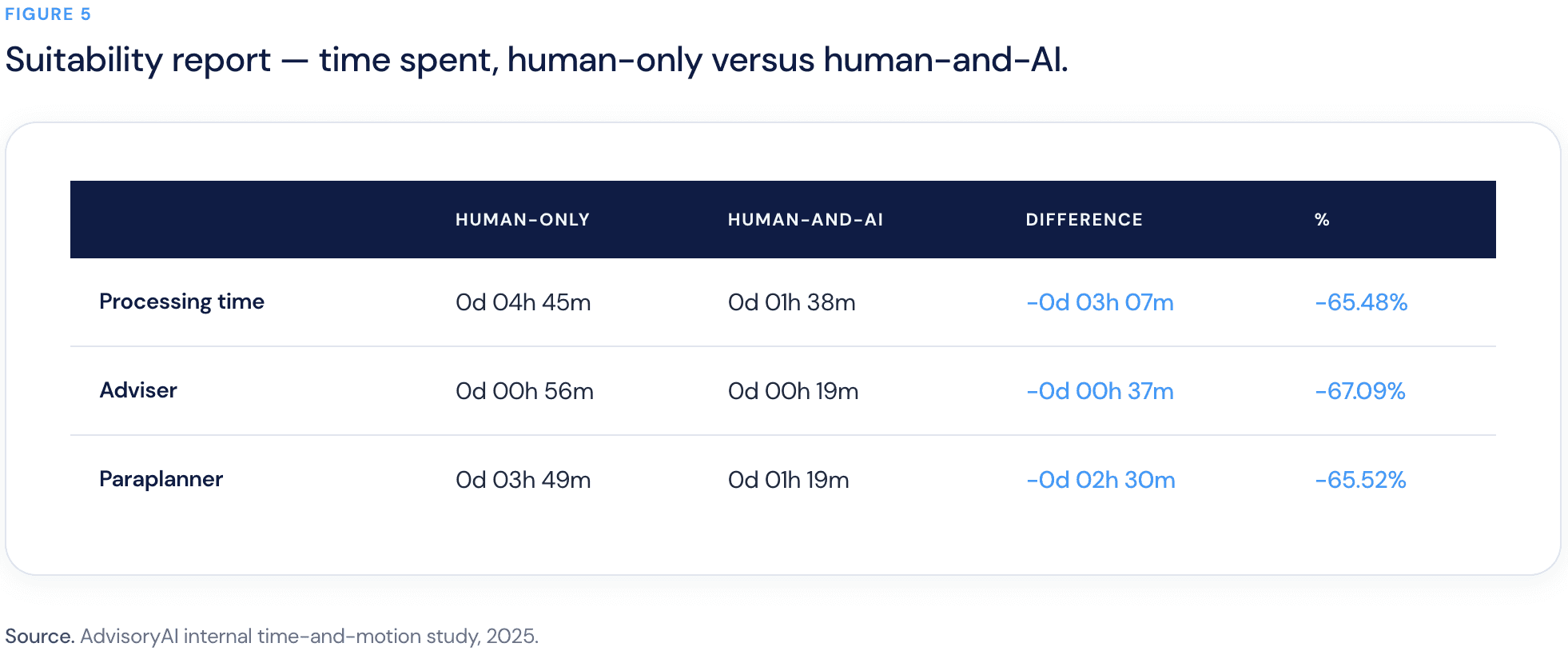
Time for writing & checking suitability letters decreased by 65.48%, from 4 hours 45 minutes to just 1h 38m.
Not sure it takes 5h 47mins for a review? Consider a full book of 120 clients that requires, on average, 2 reviews/week. Where does all the time go?
Annual review: Human-only

Annual review: Human-and-AI

Annual review: Human-only vs Human-and-AI
Suitability Reports: Human-only
Suitability Reports: Human-and-AI
Suitability Reports: Human-only vs Human-and-AI
Why This Matters
Firms spend hundreds of hours on paperwork. Jigsaw Tree's findings show that this doesn't need to be the case. Cutting suitability reporting time by two-thirds doesn't just release hours, it changes the economic equation of advice: clients who were marginal suddenly become profitable; advisers who were stuck in documentation loops suddenly have space for business development; firms that feared expanding their client base because of compliance workload find that capacity opens up.
For firms trapped on the "hamster wheel" of reviews, this is a genuine release valve. Reclaiming three and a half hours per review, including over an hour of adviser time, unlocks capacity to serve more clients without hiring, to offer more proactive touchpoints, or to refocus advisers on higher-value conversations.
One adviser we spoke to described the turning point vividly:
"For the first time, I saw how you could do a pension transfer report in minutes. You upload the fact-find, you upload the illustration, you upload pension research, costs and charges – and it produces a suitability report. A human still reviews it, but they're reviewing a fantastic report. Finally, tech that makes humans more efficient and their work more enjoyable."
— Sarah Watts, Head of Delivery, Timothy James & Partners
Peer firms are already seeing the benefit. As Helise Chao, Head of Business Architecture at Foster Denovo put it:
"Report writing is our biggest win – 70% time saving on 'pension withdrawal' reports alone. What used to take hours is now prepared in minutes, leaving advisers to do the job they're best at: giving advice."
"An unexpected outcome was the high impact on administrator time saved, especially during the Annual Review process, where an 83.87% saving was recorded. This demonstrates that AI doesn't just benefit front-office roles but also drives efficiency in critical back-office functions - often overlooked in transformation efforts."
— Jigsaw Tree
From Survival to Scale: An Operator's Playbook for Growth
The story so far is clear: admin drag and fragmented workflows cap capacity; effectively integrated AI can address the time deficit that advice firms face. The real question is not whether AI creates efficiency, but how that efficiency translates firm growth, service, and value.
What could you do if you halved the time it took to service your existing clients?
Serve twice as many clients with the same team
Reinvest it into client experience
Focus on personal growth and family
In our survey of over 150 advisers, approximately one third said they would redress their work/life balance, one third would reinvest this time to grow their business, and one third would spend more time with existing clients.
For those who choose to scale, the financial impact is significant. The following models by The Flower Group show how doubling adviser capacity with the same headcount translates into a 300% increase in the value of your firm.
How AI Translates into Firm Value
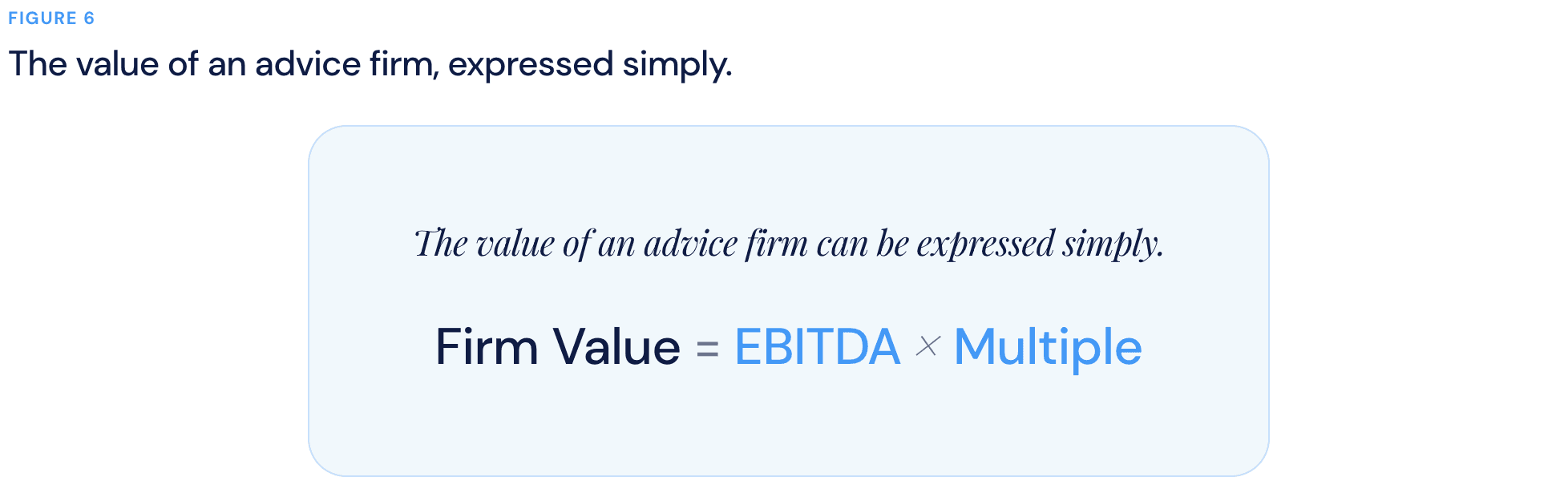
Breaking this down gives us two areas where efficiency gains translate into growth.
EBITDA (Revenue - Cost): human+AI operating model allows advisers to double their client capacity. More clients served with the same headcount translates directly into higher recurring revenue.
Multiple (Revenue Quality × Risk): human+AI-driven efficiency supports more consistent service delivery, faster reviews, and stronger compliance. That consistency deepens client loyalty and strengthens recurring revenue streams. At the same time, automated checks reduce key-person risk and mitigate compliance breaches. Lower operational risk is rewarded with higher multiples.
What Happens When You Double Capacity?
Similar to the Jigsaw Tree analysis, The Flower Group modelled traditional human-only operating model against hybrid human-and-AI operating model.
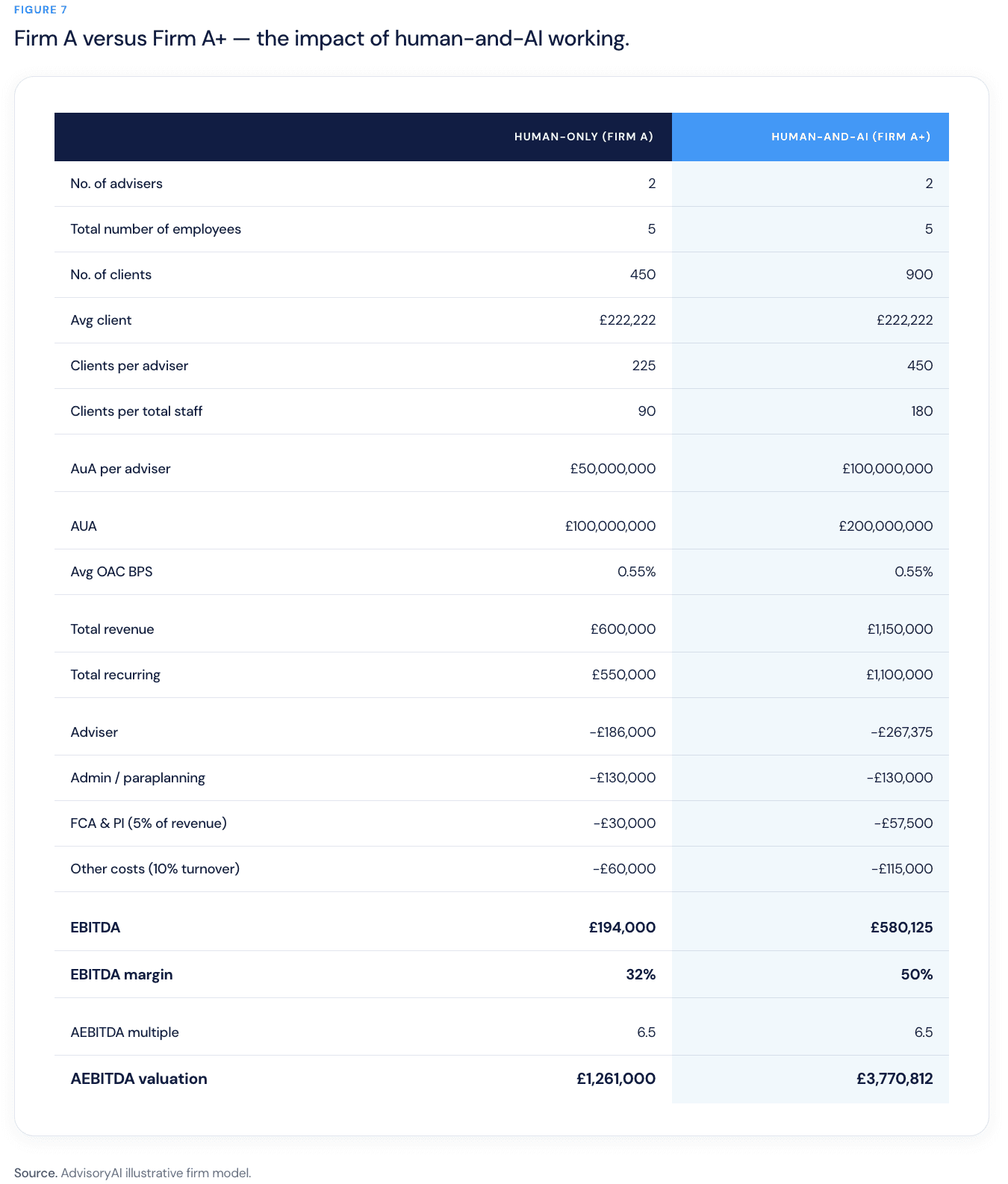
The model shows the step change clearly. With the same headcount, Firm A+ is able to serve twice as many clients as Firm A. That translates into 3x the firm value using the following assumptions:
New clients' investible assets align with existing client bank
Adviser costs increased by 50% to reflect additional commissions
EBITDA multiple assumed to stay flat (in practice, stronger recurring revenues and lower compliance risk would likely lift it further)
Average ongoing BPS fee for advice set at 0.55%, when the market rate is closer to 0.7%
The implication is simple: doubling adviser capacity does not just improve efficiency, it transforms firm economics. It drives higher recurring revenue, strengthens margins, and increases resilience. That combination creates disproportionate value.
This is the inflection point. Firms that adopt human+AI operating models move from survival to scale.
The Other Levers of Firm Economics
For completeness, there are two other levers that firms can pull: increase prices or reshape the client book. Both have been modelled by The Flower Group, and both show that the economics of advice can shift dramatically when applied well.
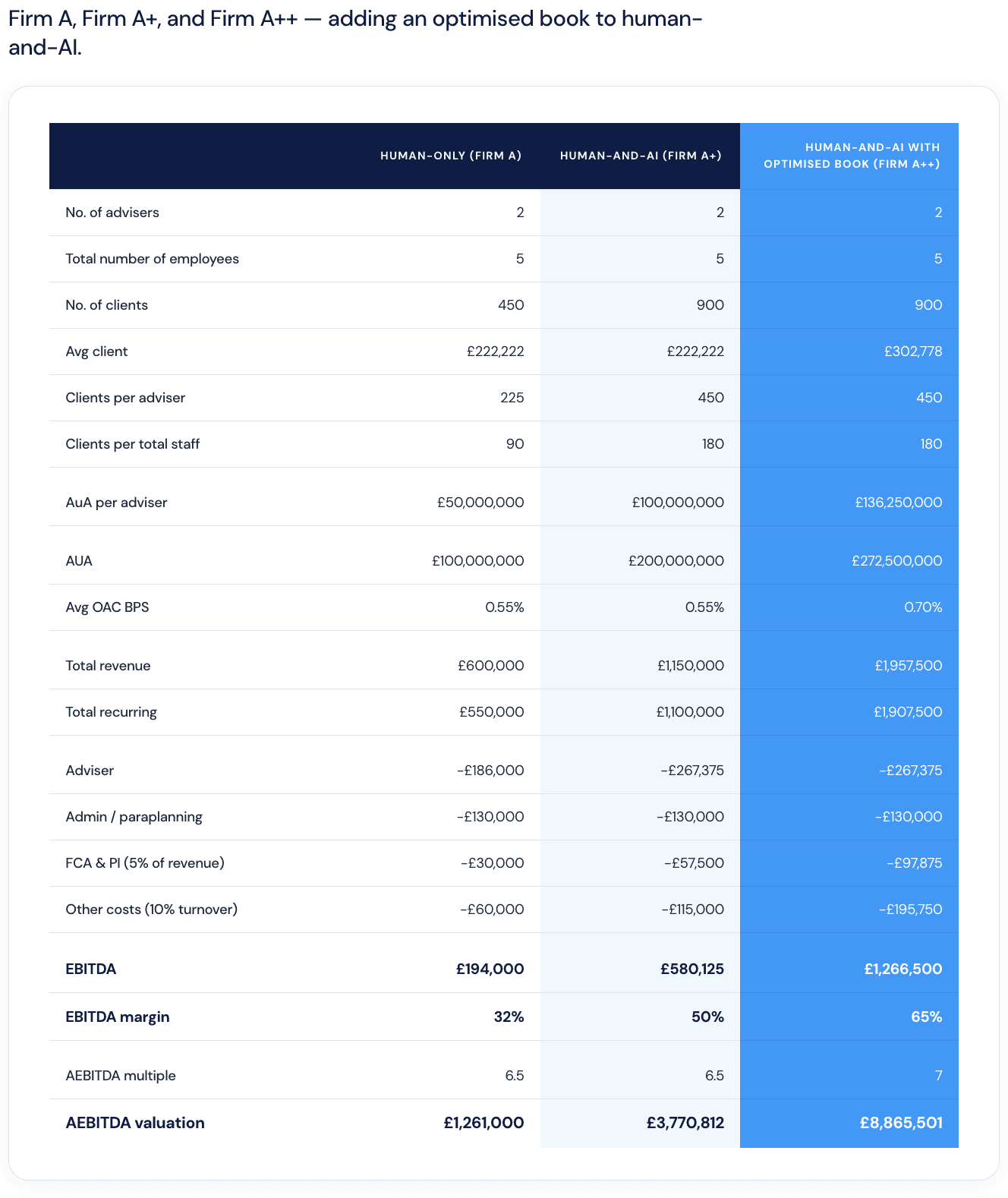
Firm A++ shows what happens when, instead of just doubling capacity, a firm also optimises its client base. By replacing lower-value clients with higher-value ones and lifting average basis points closer to market rates (in this case from 55bps to 70 bps), the economics move again. The result is £1.27m in EBITDA, a 65% margin, and a valuation approaching £9m.
So how do firms get there?
Raising prices is the most straightforward lever, though not the easiest to justify. Under Consumer Duty it is difficult to apply increases across the board, but there are circumstances where fees can be lifted by, say, 15 basis points, particularly if this is partly offset by reductions in platform or fund costs and comes with improved service.
Reshaping the client book is a powerful lever, but it raises the uncomfortable question of what happens to clients who are offboarded. Few firms can or would simply abandon them. There are reputational risks, referral opportunities that may be lost, and, not least, a duty of care.
As part of our research, we spent some time looking at potential solutions to this problem, and were introduced to Destination Retirement from Just. They offer a structured, regulated pathway for clients with less than £250,000 in investable assets, where servicing is hardest but guidance is most needed. Rather than fragmenting across DIY platforms, clients move through a single corridor for saving, modelling and retirement income, keeping the journey intact. For advisers, the benefit is a clean, documented handover that protects capacity without severing relationships, while clients retain access to guidance and advice at transparent costs.
When handled in this way, offboarding stops being a euphemism for cutting ties. It becomes a way of protecting profitability at the top end of the book while still giving smaller clients a viable home.
Conclusion
The evidence is clear: paperwork is not just an inconvenience, it is the bottleneck holding the industry back. AI has shown it can release that pressure, cutting documentation time by more than half and doubling adviser capacity. What firms do with that capacity is the real question.
Some will reinvest in client experience. Some will reclaim time for strategic focus or balance. And some will choose to scale, serving twice as many clients with the same team, whilst simultaneously strengthening compliance, and tripling firm value in the process.
Other levers, such as refining client books and adjusting fees, fundamentally shifts the economics for advice businesses. Most importantly, their impact can be multiplied together.
AdvisoryAI was built for this moment — to help advice firms redesign their models, reclaim capacity, and grow with confidence. The firms that take the step now will not only meet today's challenges. They will be the ones defining tomorrow's advice industry.
Sources
Quantitative and Qualitative Primary Research Sources:
Trustnet Survey — Strategic partner and research collaborator for the survey of over 150 advice firms
Jigsaw Tree Process Mapping Analysis — Strategic partner providing independent process mapping analysis of traditional vs AdvisoryAI-enabled process for client onboarding, Suitability Reporting and Annual Reviews
AdvisoryAI — Leading Mindsets in Advice Community interviews with UK advice firms
Industry Reports and Surveys:
Schroders UK Financial Adviser Survey (2024) — 75% of advisers expected to incorporate AI within five years
The Advice Gap 2025 (the lang cat) for statistics on client abandonment and advice gap data
FCA Research Note on AI (2025) — Highlighted growing AI adoption in advice businesses
FCA's Retail Mediation Activities Return (RMAR) for 2023 — Data on number of financial advisers, firm statistics
FCA RMAR and FCA Financial Lives, NextWealth proprietary data — Data on supply vs demand of advice
Individual/Company Perspectives from sector:
Sarah Watts, Head of Advice Delivery, Timothy James & Partners
Jonny Stubbs, Director of Risk, LIFT Financial — Multiple quotes about AI implementation and training
Lavinia MacDonald, Founder, The Money Clinic
Helise Chao, Head of Business Architecture and Process Improvement, Foster Denovo
Regulatory/Official Sources:
FCA (Financial Conduct Authority) — Various regulatory references and Consumer Duty information
FCA's Targeted Support — Regulatory initiative mentioned
Research Methodology:
Primary quantitative and qualitative research — Conducted between March and July 2025 with over 150 advice firms
Process Mapping — Independent comparison of traditional vs AI-enabled processes
Disclosure Statement — Destination Retirement from Just provided financial support to cover the production costs of this whitepaper. All research, analysis, and conclusions remain independent and were not influenced by this support.

Subscribe to our newsletter
Get an AI summary of AdvisoryAI
For questions or partnerships,
contact us at team@advisoryai.com
For product support, help, contact us at support@advisoryai.com